Old links stop working
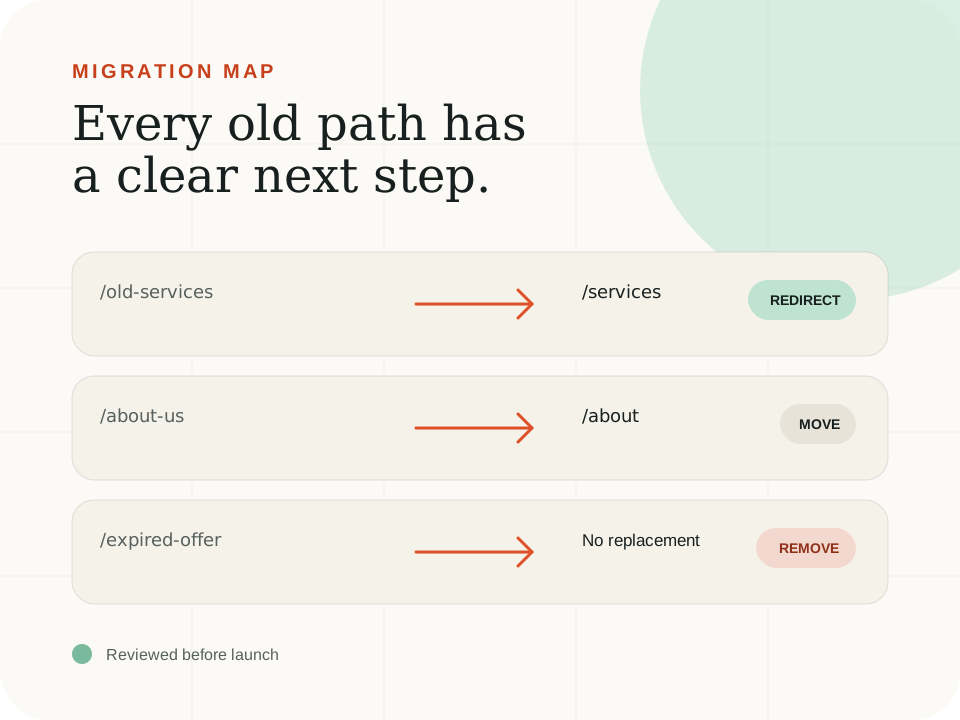
Useful pages vanish or redirect to the homepage. Visitors hit dead ends, and search engines lose the old page's context.
We protect important URLs, search traffic, and customer journeys while the new site is built.
A polished redesign can still lose traffic or break customer journeys. These are the three failures we guard against.
Useful pages vanish or redirect to the homepage. Visitors hit dead ends, and search engines lose the old page's context.
Different pages get the same titles and vague opening copy. Their purpose becomes harder to understand.
A noindex rule, temporary domain, test analytics key, or old brand name slips into production.
Each step leaves something concrete to review. No mystery. No last-minute SEO cleanup.
Find what matters
We combine the sitemap, crawl, analytics, Search Console, CMS, and backlink data. This catches valuable pages that normal navigation misses.
Plan the move
Each old path gets one outcome: keep, move, combine, or remove. Redirects go straight to the closest useful page.
Protect the page
We keep the topic people came for, then improve the page. Titles, H1s, opening copy, and internal links are checked first.
Test the launch
We crawl the final environment and compare it with the approved URL map. We also test forms, analytics, canonicals, robots, and the sitemap.
Watch the move
We check old and new URLs as soon as the site moves. Then we watch crawl errors, landing-page traffic, and conversions for the first few weeks.
The design can be ambitious. The migration process should be easy to follow.
Gather URLs, traffic, links, forms, files, and campaign pages.
Choose what stays, moves, combines, or goes away.
Keep each page's copy, metadata, links, and layout together.
Crawl the final site, verify the map, then monitor the move.
Every important old path has a clear destination or an intentional removal.
Key pages keep their topic, links, metadata, and useful content.
The team knows what passed, what needs an owner, and what to watch after launch.
Short answers to the decisions that usually slow a migration down.
No. Any major site change can affect search performance. We reduce avoidable risk, keep useful signals, and make problems easier to spot and fix.
No. Every important URL needs a decision. Redirect it only when there is a relevant replacement. Otherwise, use a clear 404 or 410.
Before the new navigation and routes are final. Early mapping finds content gaps while the new structure is still easy to change.
At least a year. Keep them longer when old URLs still receive traffic or links.